Author: Founder Vol

  • At Hoops for Hope, Tennessee Basketball Still Leads in Assists

    At Hoops for Hope, Tennessee Basketball Still Leads in Assists

    There were no scouting reports at Farragut High School on Saturday. No one cared who could switch a ball screen, win a rebounding battle or hit a corner three under pressure.

    For the 20th year, Hoops for Hope brought Tennessee’s men’s and Lady Vols basketball teams together with local athletes with Down syndrome for a day built around the game they all love. The event has grown from Trey Sexton’s Eagle Scout project into an annual August tradition that means a whole lot more than a few hours in a gym.

    That is the part easy to miss from a distance. This was not Tennessee basketball stopping by to be applauded for doing a good thing; it was a day where the people usually asked for autographs got to be teammates, rebounders, cheerleaders and, occasionally, the ones trying to keep up.

    The gym was full of the familiar sounds of basketball—sneakers, whistles, bouncing balls, cheers after a made shot—but the roles were flipped. Every participant got a chance to be introduced, take the floor, make plays and enjoy the kind of moment that can stay with a family long after the nets are taken down.

    For some, it has become a family tradition. Olivia Campbell has attended for nearly 17 years, and her mother, Jackie, told WVLT, “It’s something we look forward to every year. My face hurts from smiling when we leave.”

    That tells the story better than any press release could. Basketball can be a ruthless business once the season starts, but on this particular Saturday it was simply a reason for people to show up for one another.

    Lady Vol Kaylene Smikle recalled helping one young participant get to the rim and watching her dunk. “She was really happy,” Smikle said. “It was a really special moment.”

    And it was not special because a Tennessee player made somebody’s day, though plenty surely did. It was special because the athletes were reminded that the game’s best moments are not always the loudest ones on television.

    Hoops for Hope has lasted two decades because it understands something every fan can recognize: the best kind of basketball makes room for everybody. Saturday, the Vols and Lady Vols did not just lend their names to that idea—they got on the court and lived it.

    – Vol Hoops Staff Writer

  • Welcome Home, Vol Nation

    Welcome Home, Vol Nation

    Vol Hoops was born because I have loved University of Tennessee Volunteers basketball since I was a little child.

    Like a lot of you, I grew up with the Big Orange as part of the rhythm of life. The games, the players, the coaches, the highs that make us feel ten feet tall and the losses that weigh us down for days, some for years. Tennessee sports is not just something to pass the time; it’s in us. Almost as much as faith and family.

    That’s why this community exists.

    I wanted to build a place for the fans who are still stuck in the game days later. The ones who follow recruiting throughout the summer, know the roster inside and out or just know the top names and think of them as family. We’re here for the fans who are piecing together next season’s potential before this season is even over.

    There will be news at Vol Hoops. There will be analysis, predictions, game threads, Lady Vols coverage, SEC talk, and the occasional friendly argument that gets a little heated. Would sports be sports without that? Good fan communities do not need everyone to agree; they need people who care enough to show up and talk it out.

    But Vol Hoops is meant to be more than that. We want it to feel like your favorite warm spot online. A place to pull up a chair, talk basketball, learn something, laugh a little, and feel like you belong whether you’ve followed the Vols for fifty years or discovered them last season.

    We’ll keep it real here. We’ll keep it fun, and we’ll always remember what got this thing started. That’s the best promise we can make, and I hope it’s enough.

    Welcome to Vol Hoops ya’ll. Make yourself at home. 🏀🍊🧡

    – Eric (Founder Vol)

  • The Standard Still Has a Home in Knoxville

    The Standard Still Has a Home in Knoxville

    Basketball royalty gathered in Springfield over the weekend, and Tennessee did not arrive as a guest. It arrived as part of the furniture.

    Candace Parker and Chamique Holdsclaw entered the Naismith Memorial Basketball Hall of Fame as individual inductees, while the 1996 U.S. Women’s National Team—featuring Lady Vols Nikki McCray-Penson and Carla McGhee—went in alongside them. Four women with Tennessee ties, one Hall of Fame weekend, and a reminder that the program’s history does not need embellishment.

    It speaks for itself.

    Holdsclaw remains Tennessee’s all-time leader in points and rebounds, the centerpiece of three straight national championships and the 39-0 team that made perfection look almost routine. Parker won two national titles, reshaped what people imagined a women’s forward could do with a basketball, then built a professional résumé that left no room for debate.

    “It’s been such a journey,” Holdsclaw said when the class was announced. “Going to the University of Tennessee, and playing for Coach Pat Summitt. To go into the Hall of Fame with my sister, my friend Candace Parker is … unbelievable.”

    McCray-Penson and McGhee belong in the picture, too. Their 1996 Olympic team went 8-0, won gold in Atlanta and helped make the case that women’s basketball was ready for the stage the WNBA would soon provide. McCray-Penson’s legacy carries particular weight in Knoxville: an elite Lady Vol, an Olympic champion, a WNBA star, a coach and a beloved figure whose impact outlived her far too soon.

    The Hall of Fame weekend was not just a Tennessee nostalgia tour. It landed at a moment when the Lady Vols are trying to reconnect their present to a standard that has always been unusually demanding.

    Kim Caldwell is not being asked to recreate Pat Summitt’s program possession for possession, and nobody should pretend that is the assignment. But she understands the weight of the jersey, especially after a 16-14 season, an eight-game skid to finish it and an offseason that required rebuilding an entire roster.

    Caldwell’s response was not to duck the challenge. Tennessee signed 13 transfers and two freshmen in a matter of weeks, putting together a completely new group built around urgency, hunger and a fresh chance to establish an identity.

    “We had to do it quickly,” Caldwell said after the roster was completed. “I am really pleased with the work that we put in over three weeks.”

    That is the part of this weekend worth carrying back to Knoxville. The Hall of Fame does not hand out wins in November, and Parker or Holdsclaw cannot take a charge for this new roster in January.

    But the banners, the names and the expectations are still there. Tennessee’s standard has never been a museum piece.

    It is supposed to be lived up to.

    – Vol Hoops Staff Writer

  • Barnes Has Rebuilt Before. This One Might Be His Toughest Yet.

    Barnes Has Rebuilt Before. This One Might Be His Toughest Yet.

    Rick Barnes has rebuilt Tennessee defenses before. This time, he has to build one around a group that has barely worn the same orange jersey.

    Thirteen of the 17 players on Tennessee’s current roster are in their first season in Knoxville. DeWayne Brown II and Troy Henderson are the lone returning scholarship players, leaving Barnes with a talented but largely unfamiliar collection of transfers, freshmen and new faces who must learn the most demanding part of the program together.

    That is the real challenge behind Tennessee’s 2026-27 ceiling.

    The Vols have finished in KenPom’s top three in adjusted defensive efficiency four times over the last five seasons: third in 2021-22, first in 2022-23, then third again in each of the next two years. Even last season’s No. 14 finish carried a standard most programs would gladly take.

    At Tennessee, though, elite defense is not a bonus. It is the identity.

    Barnes’ best teams have defended with a shared understanding that takes time to develop. They close gaps before they look obvious, communicate through screens, rebound as a five-man unit and make opponents work well past the first action. That coordination is not simply installed with a few practice drills. It comes from repetition, trust and players knowing exactly where help is supposed to arrive.

    This roster has individual pieces that suggest it can get there. Miles Rubin brings proven rim protection from Loyola Chicago. Braedan Lue earned Conference USA All-Defense recognition at Kennesaw State. Juke Harris, Jalen Haralson and Manny Green give Tennessee legitimate size on the perimeter, while Terrence Hill Jr. and Dai Dai Ames add experienced guards who will be asked to set the tone at the point of attack.

    But the Vols are not replacing one stopper or one veteran voice. They are replacing a full defensive ecosystem.

    Felix Okpara protected the rim. Bishop Boswell took difficult perimeter assignments. Ja’Kobi Gillespie created havoc at the ball. Cade Phillips and Jaylen Carey supplied physicality and coverage versatility up front. Those players understood Barnes’ demands because they had already lived them or in Gillespie’s case, baptism by fire.

    Now Tennessee has to find its new organizers, its new talkers and its new players who can erase a teammate’s mistake without turning it into a layup line. Brown’s development matters, but the defense cannot rest on one returning forward becoming a finished product overnight.

    The encouraging part is that Barnes has earned the benefit of the doubt. His teams have repeatedly turned new personnel into connected, punishing defenses.

    The uneasy part is that this may be the widest reset yet. Tennessee can score with almost anybody on its schedule; whether it can defend like Tennessee by January may decide whether this group becomes dangerous contender or merely a mixed bag of talent.

    – Vol Hoops Staff Writer

  • Tennessee Needs a Tone-Setter. DeWayne Brown Can So Be That.

    Tennessee Needs a Tone-Setter. DeWayne Brown Can So Be That.

    Tennessee has added polished scorers, experienced guards and proven size through the portal. What it still needs most from within may be simpler: somebody who makes the game feel physical from the opening tip.

    DeWayne Brown has a real chance to become that guy.

    The sophomore forward is one of the few returners on a rebuilt roster, which means he brings something no newcomer can manufacture overnight: a working knowledge of Tennessee’s defensive demands, its daily standard and what Barnes expects when the game turns into a fistfight around the lane.

    Brown’s freshman numbers were modest—4.8 points and 3.6 rebounds in 35 appearances—but the efficient parts matter. He shot 58.6 percent from the field, made 10 starts and hit double figures five times, including SEC games against Texas, Florida, Auburn and Oklahoma.

    That’s not an empty freshman season. It’s a foundation.

    Barnes saw the trajectory early. During last year’s SEC Tipoff, he called Brown “probably the biggest surprise” among the freshmen and said there was “no doubt he will be a big part of our rotation.” Brown had been forced to work daily against Felix Okpara while J.P. Estrella recovered, and Barnes believed that grind accelerated the learning curve.

    Now the roster has changed, but Brown’s opportunity has only grown.

    Miles Rubin gives Tennessee a proven rim protector. Jalen Washington adds veteran SEC experience and another big body. Braeden Lue brings physicality, Christian Fermin brings length, and Brown will have to earn every minute in a crowded frontcourt.

    That competition should be good for him.

    Brown is not being asked to become a 20-point scorer or suddenly stretch the floor. Tennessee needs him to own a different job: hit first, pursue rebounds outside his area, run the floor, finish through contact and make opponents work for every inch near the rim.

    Those plays travel. They matter at Purdue. They matter in Las Vegas. They matter when the SEC schedule gets ugly and somebody has to set the temperature before the guards can take over.

    Brown’s late-season flashes suggest he is capable of more than a complementary role. In Tennessee’s Elite Eight loss to Michigan, he posted six points, two rebounds, an assist and a block in 12 minutes. It was not a breakout game, but it showed the kind of activity that can change a rotation.

    His decision to return was equally important. “There’s still so much more I want to accomplish here,” Brown said in April. “I’m motivated, I’m focused and I’m ready to keep building on what we’ve started.”

    Tennessee does not need Brown to be a finished product in November. It needs him to become the player who makes the Vols harder to play.

    That is how household names get made.

    – Vol Hoops Staff Writer

  • What Happens in Vegas…Won’t Stay in Vegas.

    What Happens in Vegas…Won’t Stay in Vegas.

    Tennessee’s Players Era draw is being sold as a Thanksgiving-week trip to Las Vegas. Look at the bracket again, though, and it feels a whole lot more like the second weekend of March—with enough national heavyweight muscle to flirt with Final Four territory.

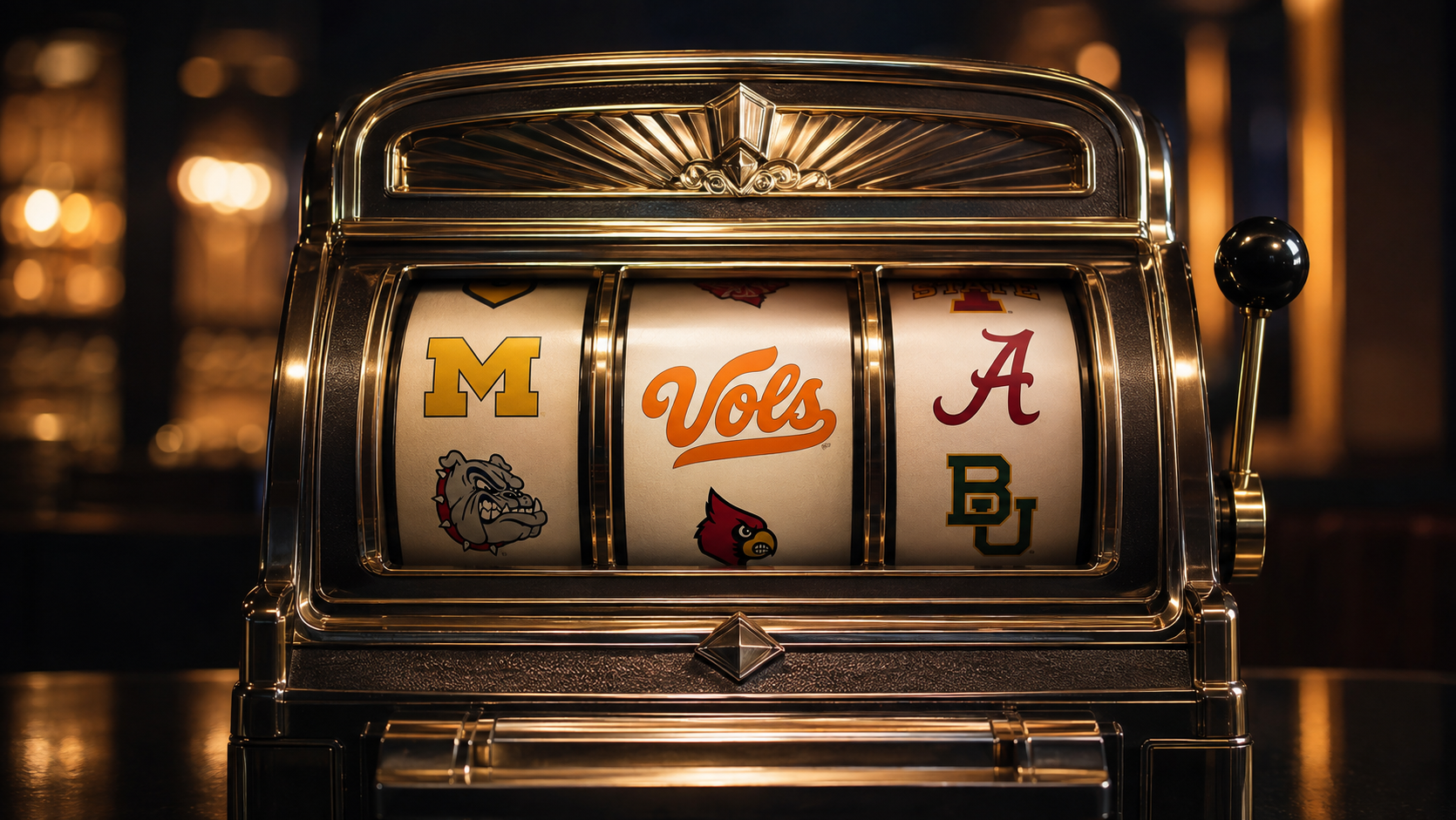
    The Vols open Nov. 24 against Maryland, then could get Iowa State or San Diego State on Thanksgiving. Make it through that side of the bracket and Tennessee could be staring at St. John’s, Oregon, Louisville or Texas Tech before even reaching the Saturday championship game.

    That is not a cozy neutral-site tune-up. That is a four-day pressure chamber.

    The other half is equally ridiculous: Gonzaga, Alabama, Michigan, Creighton, Baylor, TCU, Miami and Kansas State. Across the full Players Era Championships field, 13 teams reached the 2026 NCAA Tournament; the group has combined for 27 tournament appearances and a 55–25 NCAA Tournament record over the past two seasons.

    That is the sort of company usually reserved for the NCAA Tournament’s second weekend. If the matchups break right, the Saturday title game could carry the feel of a regional final played under Vegas lights.

    Players Era CEO Seth Berger did not exactly hide the ambition behind this thing, calling the event’s field “the strongest field outside of March.” Kansas coach Bill Self, whose Jayhawks are in the other Players Era bracket, put it more plainly: the event has “high level teams” that create “great matchups during the pre-conference season.”

    That’s one way to put it.

    For Tennessee, the value is not just a chance to stack résumé wins before the calendar flips to December. This roster is still learning its own personality, and a team can discover an awful lot when it has to prepare for Maryland, adjust to a possible Iowa State or San Diego State matchup, then turn around and survive another ranked-level opponent on short rest.

    You find out who can settle an offense when the first option gets blown up. You find out whether your bigs can stay out of foul trouble against physical teams, whether your wings can guard multiple styles, and whether the late-game group can execute when everybody in the building knows exactly where the ball is headed.

    Last season’s Vols went 2–1 in Las Vegas, beating Rutgers and then-No. 3 Houston before a close loss to Kansas. That experience did not guarantee anything in March, but it gave Tennessee a meaningful November measuring stick against teams built for deep runs.

    This year’s version is bigger, deeper and more unforgiving. The Vols will get at least three games, but the real prize may be the hard edges they leave Vegas with.

    The SEC will arrive soon enough. By then, Tennessee may already know exactly what it has.

    – Vol Hoops Staff Writer

  • Tennessee Makes the Cut for Top In-State Wing Dylan Jones

    Tennessee Makes the Cut for Top In-State Wing Dylan Jones

    Tennessee has secured a place among the final six schools for one of the state’s top basketball prospects. Four-star Bartlett High School wing Dylan Jones is considering the Vols alongside Alabama, Texas A&M, Providence, Ole Miss and Memphis.

    Jones is listed by 247Sports at 6-foot-6 and 210 pounds entering his senior season. The 247Sports Composite ranks him No. 43 nationally, No. 11 among small forwards and the top 2027 prospect in Tennessee.

    The Vols will get their next major opportunity with Jones when he takes an official visit to Knoxville beginning Oct. 2. Tennessee currently has no commitments in its 2027 class, making the visit an early chance for Rick Barnes and his staff to begin building that group around one of the best players in their own backyard.

    Jones averaged 16.1 points, 4.3 rebounds and 1.9 assists across 33 games for Bartlett last season. He helped the Panthers reach the Class 4A state championship game and participated in the NBPA Top 100 Camp during the summer.

    His appeal goes well beyond his scoring average. Jones has the size and length to defend multiple positions, while his offensive game allows him to attack the basket, hit shots from outside and operate without needing every possession built around him.

    “Jones is strong and versatile with a scorer’s mentality,” 247Sports director of scouting Adam Finkelstein wrote. “He already has the ability to play and defend multiple positions.”

    That versatility should make Jones an obvious fit for Barnes, who has increasingly stocked Tennessee’s roster with interchangeable wings capable of affecting games at both ends. The Vols signed three four-star wings in their 2026 class, but Jones would arrive a year later with his own opportunity to claim an important role.

    The competition will be serious. Memphis provides the hometown pull, while Alabama, Ole Miss and Texas A&M give Tennessee three SEC programs to beat.

    That makes the Oct. 2 visit more than another date on the recruiting calendar. Tennessee has gotten itself into the race for the state’s best 2027 player; now the Vols have a chance to convince him that his best destination is only a few hours east.

    Can Barnes keep Dylan Jones away from Memphis and the SEC?

    Jones is the top-ranked 2027 player in Tennessee, and the Vols will get him on campus Oct. 2. Memphis has the hometown advantage, but beating the Tigers, Alabama, Ole Miss and Texas A&M for him would be one heck of a way for Barnes to start this class.

    – Vol Hoops Staff Writer

  • Kim Caldwell’s Lady Vols Just Took the Hard Way – On Purpose

    Kim Caldwell’s Lady Vols Just Took the Hard Way – On Purpose

    Kim Caldwell could have given Tennessee a softer runway into 2026-27. A roster still finding its rhythm, a program trying to turn promise into consistency, and an SEC slate that offers plenty of punishment all made that option available.

    Instead, the Lady Vols built a non-conference schedule that practically dares the season to test them early.

    Defending national champion UCLA comes to Food City Center on Nov. 22. Tennessee will then travel to Virginia Tech, head north to face No. 3 UConn on Dec. 12, and meet Baylor in Nashville six days later.

    That is not a recovery schedule. It is a declaration.

    The UCLA game carries an obvious edge after the Bruins handled Tennessee, 99-77, last November before finishing 37-1 and winning the national championship. UConn is another rematch, following last season’s 96-66 loss in Hartford, and Baylor owns a six-game winning streak in the series.

    Caldwell could have sidestepped all three. She did not.

    Tennessee will play 10 games against teams in USA TODAY’s way-too-early top 25, including five before Christmas. It is also set to face all four of last season’s Final Four teams for the second straight season, with 14 of its 32 scheduled games coming against 2026 NCAA Tournament teams.

    The message is hard to miss: this program is done trying to grow in private.

    That does not mean the Lady Vols expect to sweep every marquee game. Nobody should confuse an ambitious schedule with an automatic breakthrough, especially in a season loaded with new faces and difficult road environments.

    But teams learn very little from being comfortable in November. Tennessee will find out quickly whether its transition defense can hold up against elite athletes, whether its guards can handle top-level pressure and whether its offense can create quality looks when the first option is taken away.

    Those are the questions that decide March, not whether a team can cruise through a forgiving early slate.

    The timing of the UConn game is especially bold. It will be the 29th meeting in one of women’s basketball’s defining rivalries and the earliest date the programs have ever played, arriving before Tennessee has had the luxury of a long regular-season runway.

    That game is not about avenging one 30-point loss. It is about walking into a heavyweight environment before the calendar turns and seeing exactly how far the Lady Vols have to go.

    Caldwell’s team also gets plenty of opportunities to build confidence, including home dates with Middle Tennessee, Radford and Georgia State, plus a trip to Belmont. But those games are built around the tests, not in place of them.

    The Lady Vols have chosen the hard way. In this case, that is the point.

    By the time SEC play arrives, Tennessee will either be battle-tested or bruised. Either way, nobody will be able to say the Lady Vols hid from the work it takes to matter again.

    – Vol Hoops Staff Writer

  • Everybody Hates Will Wade. LSU Couldn’t Be Happier.

    Everybody Hates Will Wade. LSU Couldn’t Be Happier.

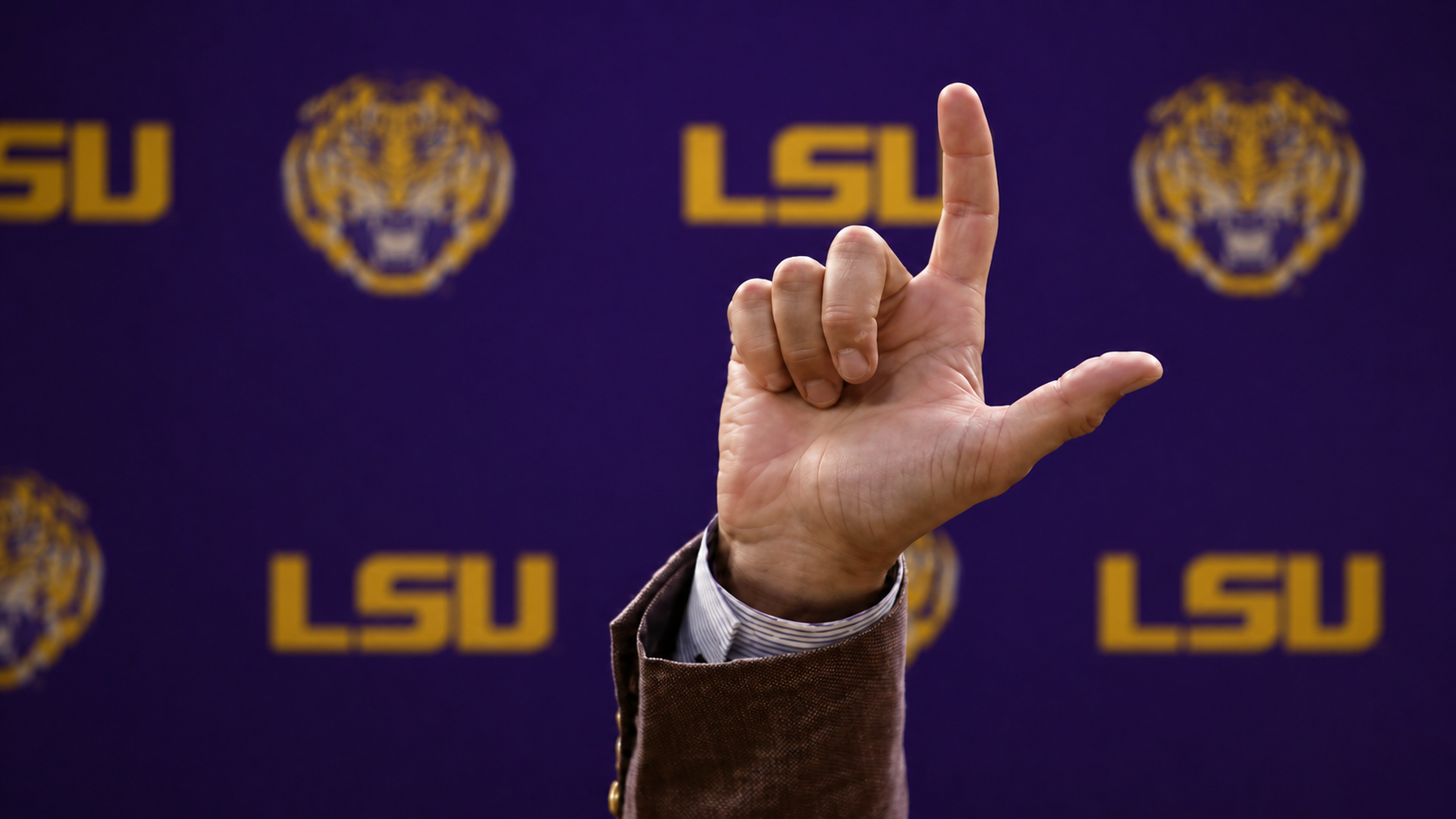
    Will Wade is not new to Baton Rouge anymore. The introductory press conference is long over, the staff is in place, and LSU is now in the strange late-summer stage of trying to turn his usual blend of confidence, creativity and chaos into a finished basketball team.

    That is precisely why the rest of the SEC is already annoyed.

    Wade has never been especially interested in making the sport’s establishment comfortable, and LSU did not bring him back to be careful. The Tigers hired him to build quickly, recruit aggressively and make the PMAC matter again.

    He has done nothing to suggest a softer version of himself is coming.

    When Wade spoke publicly about LSU’s still-unsettled roster this spring, he did not sound like a coach sweating the optics. “Low volume in terms of what you guys know,” he said with a smirk, before adding, “By the end of August, we’ll have a great team.”

    That is Wade in a nutshell: give everyone just enough to talk about, then dare them to keep up.

    The current LSU roster still lists only four players, a remarkable August reality for an SEC program. Yet the roster uncertainty has not made anyone dismiss Wade; it has made everyone wait for the next shoe to drop.

    And there is always another shoe.

    The attempted pursuit of former St. John’s star RJ Luis, whose NCAA eligibility is contested after signing an NBA contract, lit a fresh fire under Wade’s critics. College basketball reporter Jeff Goodman did not mince words, saying, “Will Wade, I wish you didn’t come back to college basketball,” before calling the situation “a mockery.”

    That is a dramatic reaction, but it also explains the current mood around Wade. His detractors see a coach constantly trying to locate the outer edge of the rules; his supporters see one of the few coaches honest enough to attack every available opening.

    LSU sees the second version. Of course it does.

    Wade himself made the relationship plain upon returning, saying, “I understand I’m not for everybody,” before delivering the line Tiger fans surely enjoyed most: “I’m for LSU and LSU is for me.”

    The SEC should probably take him at his word.

    Nobody outside Louisiana is obligated to enjoy Wade’s act, and plenty of people plainly do not. But the league is more entertaining when it has a coach willing to wear the black hat, build a contender in public and force everyone else to decide whether they are angry because he is wrong—or because he might be good.

    LSU did not hire Will Wade to be liked. It hired him to win fast enough that the boos have to get louder.

    – Vol Hoops Staff Writer

  • A New Way to Build a Contender in Knoxville

    A New Way to Build a Contender in Knoxville

    Rick Barnes did not spend this offseason trying to preserve Tennessee basketball’s continuity. He spent it buying production.

    The Vols are coming off a third straight Elite Eight appearance, yet the roster that carried them there was not built to linger. Tennessee lost six players to the transfer portal and saw more major contributors move on, leaving Barnes with a choice: patiently develop a mostly new group or attack the portal with the urgency of a program that believes its championship window is open now.

    He chose the latter.

    Tennessee brought in nine transfers, with six landing inside 247Sports’ final top 100 portal rankings. Juke Harris arrived as the No. 8 overall player in those rankings, while Terrence Hill Jr. checked in at No. 19 and Jalen Haralson at No. 25. Dai Dai Ames, Tyler Lundblade and Miles Rubin followed inside the top 100.

    That is not a rebuilding class in the traditional sense. It is a collection of players who have already been asked to score, defend, lead or survive the nightly grind of college basketball somewhere else.

    Harris gives Tennessee a proven high-level wing scorer. Hill and Ames bring experienced ballhandling to a backcourt replacing Ja’Kobi Gillespie and Bishop Boswell. Lundblade arrives with a shooting résumé that can change spacing immediately, while Rubin, Braedan Lue, Jalen Washington and Christian Fermin give Barnes a much different menu of frontcourt options than he had a year ago.

    The gamble is obvious. Chemistry cannot be imported on a transfer ranking.

    Tennessee’s best teams under Barnes have been defined by their defensive connection as much as their talent. They have trusted the next rotation, closed possessions with rebounds and understood when a teammate needed help before the offense could exploit it. This group will have to create that language quickly, with almost no shared Tennessee experience to lean on.

    But there is another way to view the reset: Barnes is not asking a young core to become good enough someday. He is betting that older, accomplished players can become good enough together.

    That distinction matters.

    The modern portal has changed what a contender can be. A program no longer has to accept a two-year runway after losing its backbone; it can replace production with production, then use its coaching infrastructure to turn that talent into a team. Tennessee has made that bet more aggressively than at any point in the Barnes era.

    There will be awkward nights. There may be defensive lapses that last year’s veterans would have cleaned up automatically. Yet the ceiling is easy to see: a roster loaded with players who have already done meaningful things in college basketball, now playing inside one of the sport’s most reliable systems.

    Barnes did not choose continuity because this offseason did not offer much of it. He chose the next best thing—a roster built to matter immediately.

    – Vol Hoops Staff Writer