Author: Founder Vol

  • 5 Reasons Rick Barnes and Tennessee Will Win It All in 2027

    5 Reasons Rick Barnes and Tennessee Will Win It All in 2027

    Every March, college basketball reminds us of one simple truth: the best roster doesn’t always cut down the nets.

    Talent matters. Experience matters. Health matters. A favorable draw matters. Sometimes, one cold shooting night changes everything.

    So why believe Tennessee can finally break through in 2027?

    Because this feels different.

    Rick Barnes has built outstanding teams before. He’s won conference championships, developed NBA talent and guided Tennessee to three consecutive Elite Eight appearances. The program isn’t trying to prove it belongs among college basketball’s elite anymore. It already does.

    The question now isn’t whether Tennessee can contend.

    It’s whether this is the roster that finally gets the Vols over the final hurdle.

    1. Barnes Finally Built the Roster He’s Been Chasing

    After the Elite Eight loss to Michigan, Barnes made it clear his staff was looking for production over retention.

    He wasn’t interested in winning the offseason headline cycle. He was interested in correcting the one weakness that has repeatedly surfaced in March: consistent offensive firepower.

    Mission accomplished.

    ESPN ranked Tennessee’s transfer portal class No. 1 in the country after the Vols assembled one of the deepest and most accomplished groups of newcomers in college basketball.

    2. This Backcourt Can Win Tournament Games

    March basketball belongs to guards.

    When possessions slow down and half-court execution becomes everything, somebody has to create offense.

    Juke Harris, Dai Dai Ames, Terrence Hill Jr., Tyler Lundblade and Jalen Haralson give Tennessee more creators, shooters and playmakers than Barnes has arguably ever coached in Knoxville.

    For years, Tennessee’s defense carried its offense.

    This season, the offense may finally return the favor.

    3. Tennessee Doesn’t Need Superstars Everywhere

    One misconception surrounding championship teams is that every position has to feature an All-American.

    History says otherwise.

    The Vols don’t need a dominant 25-point scorer in the post if the frontcourt rebounds, protects the rim and complements what could become one of the nation’s most explosive perimeter groups.

    Miles Rubin brings proven rim protection. Christian Fermin offers intriguing upside. Barnes has never asked his centers to carry the offense. He’s asked them to anchor winning basketball.

    If they do that, Tennessee’s roster construction makes a great deal of sense.

    4. Rick Barnes Has Already Solved the Hard Part

    Culture.

    Programs around the country can assemble talent through the transfer portal.

    Very few consistently build accountability.

    Barnes has spent more than a decade creating an identity that players buy into almost immediately. Defense. Toughness. Unselfishness. Daily consistency.

    This year’s newcomers aren’t walking into chaos.

    They’re walking into one of the healthiest cultures in college basketball.

    That matters far more than most preseason rankings can measure.

    5. Experience Has Become an Advantage, Not a Burden

    Three straight Elite Eight appearances leave behind frustration.

    They also leave behind perspective.

    Tennessee no longer enters March hoping to prove it belongs on the national stage. The Vols expect to be there.

    That expectation changes everything.

    Every deep tournament run has added another layer to the program. Every painful ending has exposed another weakness. This offseason, Barnes attacked those weaknesses more aggressively than at any point during his Tennessee tenure.

    Does that guarantee a national championship?

    Of course not.

    Florida, Houston, Kentucky, Duke, Kansas and several others will have something to say about that.

    But if someone asked me today which Tennessee team under Rick Barnes has the best chance to finish the job, I wouldn’t hesitate.

    It’s this one.

    Not because it’s perfect.

    Because for the first time in a long time, the Vols appear to have enough offense to match the championship-level culture they’ve spent years building.

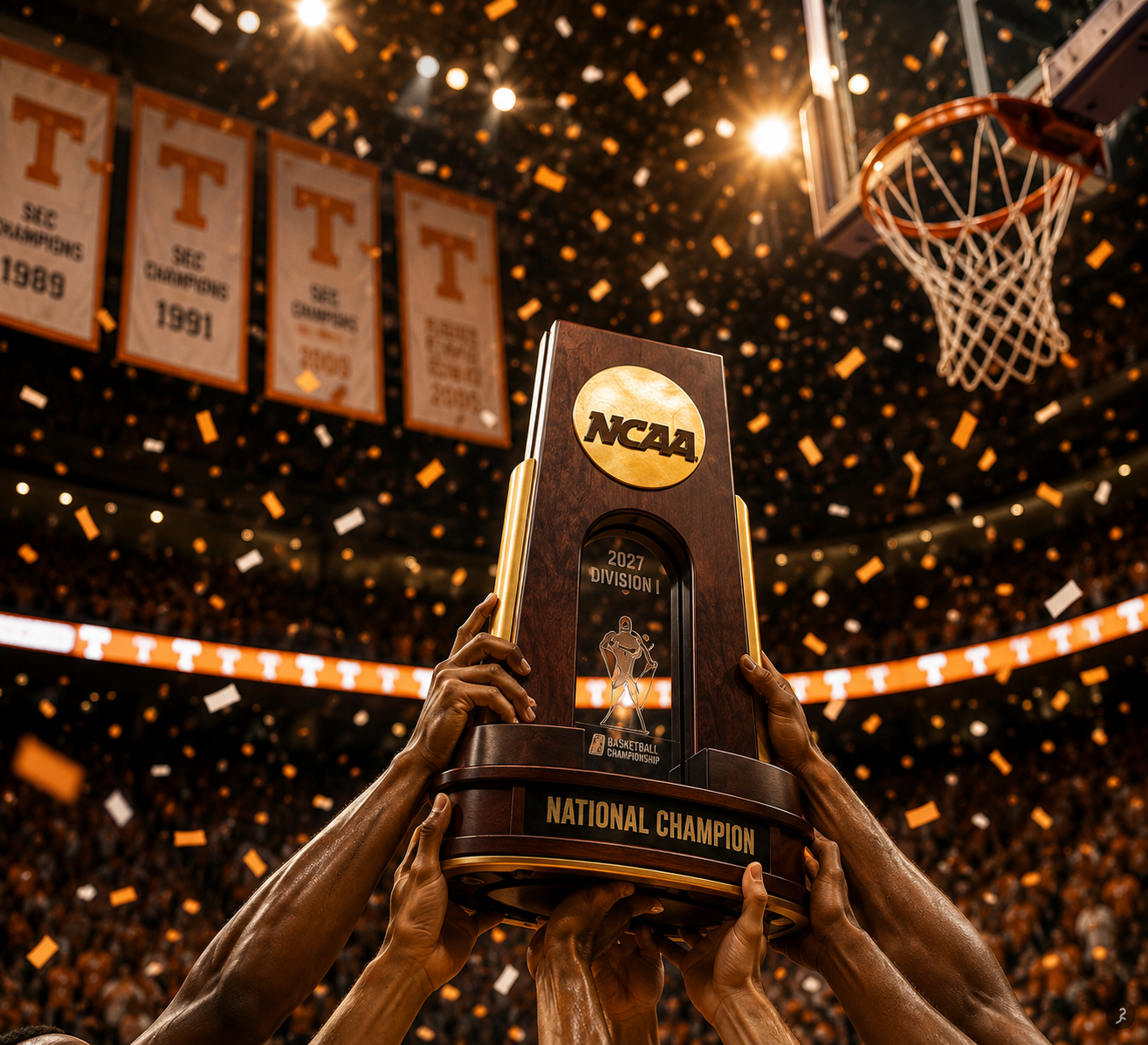
    And if those two finally meet at the right moment next March, don’t be surprised if the confetti falling from the Alamodome ceiling happens to be orange.

    Vol Hoops Staff Writer

  • The New-Look Vols Are Finally Together. Now the Real Work Begins.

    The New-Look Vols Are Finally Together. Now the Real Work Begins.

    For months, Tennessee fans have watched the roster come together one commitment at a time.

    A transfer announcement here. A recruiting win there. Another national analyst moving the Vols up a preseason ranking after Rick Barnes landed yet another coveted addition.

    Now comes the part everyone has been waiting for.

    The 2026-27 Tennessee basketball team is on campus.

    Summer arrivals don’t generate the attention that portal commitments do, but they mark the beginning of the most important phase of roster construction. Strength and conditioning sessions intensify. New players begin learning Tennessee’s defensive system. Relationships that existed only through phone calls and group texts start becoming real.

    The excitement surrounding this group is easy to understand.

    ESPN recently ranked Tennessee’s transfer portal haul as the best in the nation, a remarkable accomplishment for a program replacing so much production from an Elite Eight team. The Vols added proven scoring, athleticism and experience across multiple positions, creating a roster that many observers believe has the talent to compete with anyone in college basketball.

    The names have become familiar by now.

    Former Wake Forest standout Juke Harris arrives in Knoxville after an All-ACC campaign. Former Notre Dame forward Jalen Haralson brings size and versatility on the wing. Guards Terrence Hill and Dai Dai Ames add even more skill and shot creation to a backcourt that has generated considerable buzz throughout the offseason.

    Talent, though, has never been the final measure of success under Barnes.

    Some of Tennessee’s best teams have been defined as much by leadership and accountability as by raw ability. That’s one reason Haralson’s comments during his recent media availability stood out. He spoke repeatedly about learning from veteran teammates, embracing coaching and understanding that every player has a role to play within the program’s culture.

    Those remarks may not have generated viral headlines, but they reflected something Tennessee’s staff values deeply. The Vols are not trying to build an all-star team. They are trying to build a connected one.

    Paper, however, has never won a game.

    The challenge over the next several months won’t be discovering whether Tennessee has enough talent. Most analysts appear convinced that question has already been answered.

    The challenge is transforming a collection of highly regarded newcomers into a team capable of defending at Tennessee’s standard, surviving the grind of SEC play and delivering in March.

    The work taking place inside the practice facility this summer won’t be visible to fans. There won’t be television cameras documenting every workout or every leadership conversation.

    Yet those unseen hours may ultimately determine the ceiling of a team that enters the season carrying enormous expectations.

    The roster has arrived.

    Now Tennessee begins the process of becoming Tennessee.

    Vol Hoops Staff Writer

  • Why Tennessee’s Preseason Ranking Isn’t Matching the Hype — Yet

    Why Tennessee’s Preseason Ranking Isn’t Matching the Hype — Yet

    If you’ve spent any time around Tennessee basketball fans this offseason, you’ve probably noticed a disconnect.

    On one hand, the Volunteers assembled one of the nation’s most celebrated transfer classes. Tennessee surged to No. 2 nationally in the 247Sports transfer portal rankings after adding a collection of proven scorers, high-level athletes and defensive pieces.

    On the other hand, many early preseason rankings continue to place Rick Barnes’ team somewhere in the back half of the Top 15 rather than among the handful of national title favorites. CBS Sports, for example, recently slotted Tennessee at No. 15 despite the impressive offseason haul.

    So what gives?

    The answer isn’t that national analysts dislike Tennessee’s roster. In fact, most of them appear genuinely impressed by it. The hesitation comes from a simple reality: projecting talent is easier than projecting chemistry.

    For years, Barnes built Tennessee around continuity. Veteran leadership became a hallmark of the program. Whether it was the era of Grant Williams and Admiral Schofield or more recent teams led by Zakai Zeigler, the Vols typically entered a season with an established identity already in place.

    This year’s roster is different.

    The roster overhaul has been substantial. Tennessee lost essentially its entire starting lineup and turned to the portal to rebuild. While the incoming talent level is undeniable, analysts are being asked to project how a group of newcomers will function together before they’ve played a meaningful possession in orange.

    That’s particularly true in the backcourt.

    Many Tennessee fans believe the Vols have assembled one of the most dangerous guard rotations in college basketball. There is scoring punch, athleticism, length and shot creation that previous Tennessee teams occasionally lacked. National writers largely agree with that assessment. The additions of players such as Juke Harris and Jalen Haralson have been widely viewed as major wins, with Harris in particular being discussed as a potential game-changing offensive piece.

    But the question national analysts keep asking is not whether Tennessee can score.

    It’s whether Tennessee can defend like Tennessee.

    That may sound strange considering Barnes’ reputation, but it remains one of the biggest unknowns on the roster. Several preseason evaluations have specifically pointed to the challenge of maintaining the program’s elite defensive standard after replacing so many established contributors. Tennessee’s portal additions bring offensive firepower, yet nobody knows whether the collective group can immediately replicate the defensive discipline that has become the program’s trademark.

    The frontcourt presents a similar dilemma.

    Among Tennessee fans, the general belief is that the Vols don’t need a dominant post scorer. They simply need reliable rebounding, rim protection and complementary production around a loaded perimeter group.

    That’s a perfectly reasonable argument.

    National pollsters, however, tend to be conservative when evaluating frontcourts that rely heavily on projection. Players such as Miles Rubin and Christian Fermin bring intriguing defensive tools and upside, but analysts are waiting to see those pieces produce consistently at the SEC level before elevating Tennessee into the top tier alongside teams returning proven frontcourt stars.

    There’s another factor working against the Vols in preseason rankings: returning production.

    Many of the teams appearing ahead of Tennessee are benefiting from roster continuity. Pollsters generally feel more comfortable projecting a team that returns multiple starters than one replacing nearly every major contributor, even when the latter possesses greater raw talent. That dynamic can be seen throughout numerous way-too-early rankings, where returning experience often receives significant weight.

    Ironically, Tennessee’s ranking may actually be a sign of respect rather than skepticism.

    A few years ago, a team replacing virtually every starter might have been projected outside the Top 25 altogether. Instead, most national outlets still view the Vols as a Top 15-caliber team before summer workouts are complete. Analysts appear to trust Barnes’ track record, the quality of the portal class and Tennessee’s established culture enough to keep the program firmly in the national conversation.

    The ceiling is where things get interesting.

    If the backcourt proves as explosive as many Tennessee fans expect and the frontcourt develops into a dependable supporting cast, the Volunteers could climb rapidly once games begin. Several national observers have already suggested that Tennessee possesses genuine Final Four potential if the roster pieces fit together as hoped.

    For now, preseason rankings are simply asking a reasonable question:

    Can a team built almost entirely from new pieces become Tennessee before Tennessee has actually played basketball?

    Vol fans believe the answer is yes.

    National voters just want to see it first.

    Vol Hoops Staff Writer

  • A December Date With Some March Baggage

    A December Date With Some March Baggage

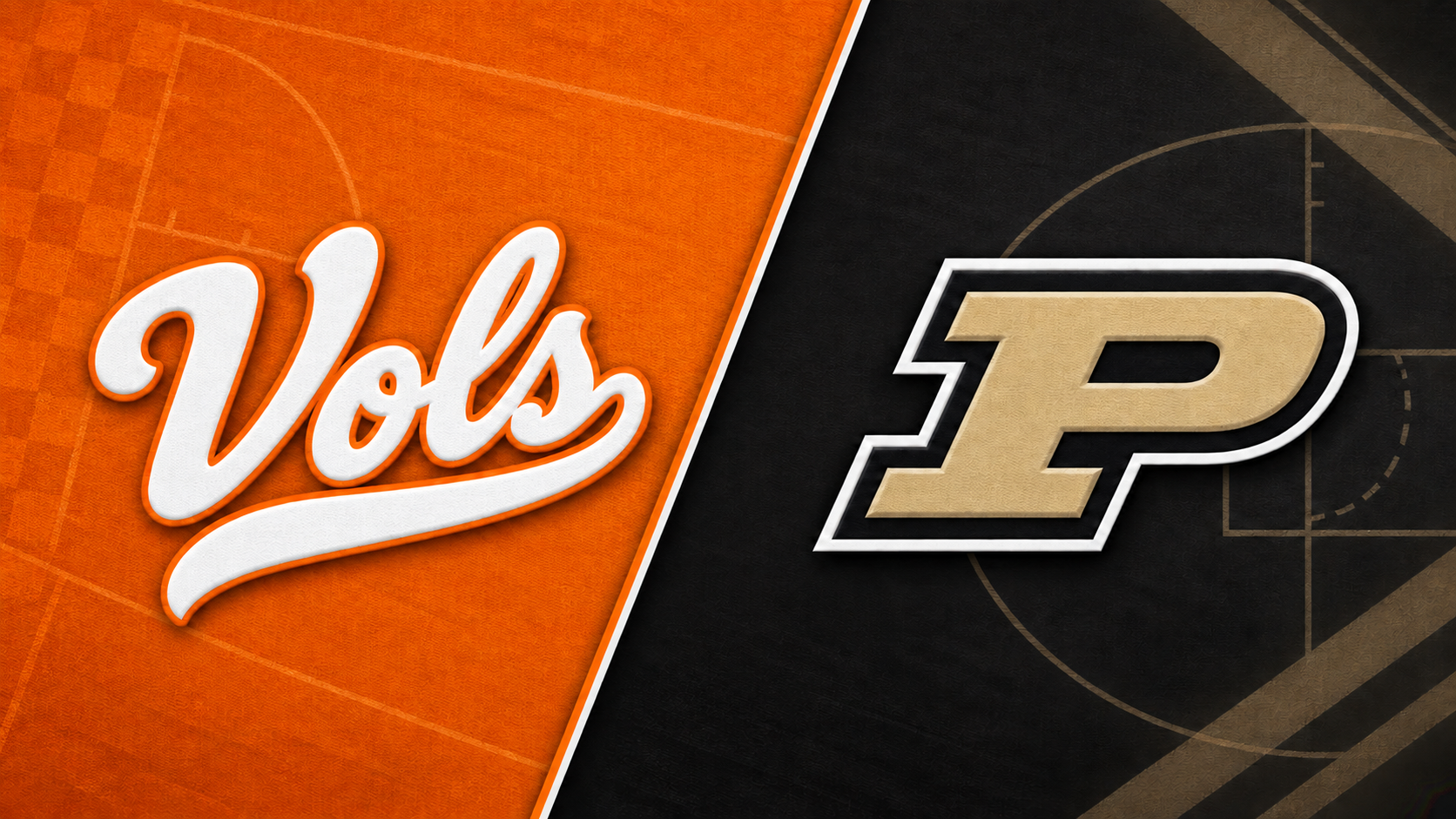
    Tennessee’s Dec. 11 trip to Purdue is not just another big nonconference game. It is a road test at Mackey Arena, a chance to measure a rebuilt roster, and a meeting with a program that has left a couple of marks on the Vols when the calendar mattered most.

    The freshest one still stings. Purdue ended Tennessee’s 2024 season with a 72-66 Elite Eight win in Detroit, sending the Boilermakers to the Final Four and leaving the Vols one game shy of their first trip there.

    Dalton Knecht scored 37 points that afternoon, the most ever by a Volunteer in an NCAA Tournament game. Zach Edey answered with 40 points and 16 rebounds, and Purdue’s 10-2 run after a 58-58 tie was the stretch Tennessee never fully recovered from.

    That was then, of course. Edey and Knecht are gone, the 2026-27 Vols have almost an entirely new roster, and trying to turn a December game into a revenge movie would be silly.

    Still, programs remember certain opponents.

    Purdue owns a 5-2 edge in the all-time series, including a 2019 Sweet 16 overtime loss that Tennessee fans have not exactly filed away and forgotten. This will also be Tennessee’s first true road game of the season and just its second-ever trip to West Lafayette.

    That makes Mackey Arena the right kind of test for this group. Rick Barnes has assembled a roster with proven scoring, more size than Tennessee had a few weeks ago, and enough lineup options to keep opponents guessing—but none of that tells us how the Vols will respond when the building is loud, the game gets tight and the other team starts punching back.

    The schedule gives Tennessee plenty of early challenges before then. Michigan State visits Knoxville in November, the Vols head to Las Vegas for the Players Era event, and Florida State and NC State arrive before the Purdue trip.

    But Purdue is different.

    It is the first game on the slate that combines a difficult road environment, a high-level opponent and real emotional residue. Nobody in Tennessee’s locker room needs to pretend Dec. 11 will settle anything from March 2024.

    It will not.

    What it can do is offer an early clue about whether this retooled Vols team has the toughness to win the kind of game that shows up in March. For a program that has reached three straight Elite Eights, that is the standard now—and it is a good thing Tennessee gets to see where it stands before Christmas.

    – Vol Hoops Staff Writer

  • Dai Dai Ames Might Be Tennessee’s Best Problem

    Dai Dai Ames Might Be Tennessee’s Best Problem

    Tennessee’s backcourt is loaded enough that a player who averaged 16.9 points per game in the ACC could begin the season coming off the bench. That sounds upside down until you look at the roster Rick Barnes has assembled—and then it starts to look like a luxury few SEC teams can match.

    Terrence Hill Jr. is expected to run the offense. Juke Harris brings his own star power, Tyler Lundblade’s movement shooting makes defenses bend, and Jalen Haralson gives Tennessee another big, physical playmaker. Somebody talented is going to have to accept a different opening role.

    Ames may be that somebody, and it could be a gift.

    The senior transfer from Cal was not merely a volume scorer last season. He put up 16.9 points on 46.4 percent shooting, made 37.6 percent of his threes and hit 85 percent from the foul line, while scoring 20 or more points 12 times. He was one of only 13 Power Five players to clear 46 percent from the field, 37 percent from three and 85 percent at the stripe. Tennessee’s official release

    That is a starter’s résumé. It is also exactly the profile that can rescue a possession when the game gets sideways.

    Barnes made the attraction plain after Ames signed, calling him a player who “can make shots in late-clock situations.” The Tennessee coach also highlighted Ames as “a crafty lefty with a strong frame who can finish at the rim through contact,” along with being a movement shooter and elite midrange scorer. Tennessee Athletics

    That mix matters. Lundblade is a terrific fit next to more ball-dominant creators because of the pressure he puts on defenses without needing many dribbles. Ames is different: he can take the ball, find a soft spot, get into a defender’s body, pull up from the elbow or manufacture a good look when Tennessee’s first action gets swallowed whole.

    There will be nights when the Vols need exactly that off the bench.

    The evidence is not theoretical, either. In January, Ames hit a four-point play with 9.9 seconds left to beat Notre Dame—whose Jalen Haralson is now his teammate. Haralson remembers it well: “He’s a winner. He’s experienced, a real experienced guy,” he said. “He’s a hooper.” Rocky Top Insider

    “Sixth man” can sound like a consolation prize. For this Tennessee team, it may mean the opposite.

    Ames could start plenty of games; lineups will evolve, injuries happen and Barnes will follow production. But if the Vols can bring an All-ACC scorer into a tense game when an opponent’s starters are already tired, that is not a lineup problem.

    That is a weapon.

    – Vol Hoops Staff Writer