Author: Founder Vol

  • No Soft Launch: Vols Add Xavier to October Exhibition Slate

    No Soft Launch: Vols Add Xavier to October Exhibition Slate

    Tennessee will host Xavier in an Oct. 15 exhibition at Food City Center, giving the Vols an early chance to put their almost entirely retooled roster in front of a live Knoxville crowd.

    This is not the sort of exhibition that should be dismissed as a glorified intra-squad scrimmage. Five days later, Tennessee heads to Cameron Indoor Stadium for another exhibition against Duke, so Xavier becomes the first meaningful checkpoint before one of college basketball’s most intimidating preseason environments.

    The Musketeers are coming off a 15-18 season and remain in the early stages of Richard Pitino’s tenure, but the name still carries weight. A Big East opponent brings a different kind of physicality, organization and urgency than the anonymous preseason fare fans are used to seeing in October.

    For Tennessee, the result will matter less than the answers it produces.

    Rick Barnes and his staff need to see how quickly a new backcourt communicates when the game gets choppy. They need to see which frontcourt combinations work, how Jalen Washington fits into the rotation, and whether the Vols can find the defensive identity that has become a Barnes hallmark while introducing so many new pieces.

    That makes Xavier a particularly useful first opponent. It is a home game, which should allow Tennessee to experiment without immediately dropping its new group into a hostile road atmosphere, but it is also a credible enough opponent to expose problems a closed scrimmage might let slide.

    The timing matters, too. Tennessee opens the regular season against Wofford on Nov. 3, leaving only a narrow window to turn promising talent into a functioning team.

    The Vols own a 12-5 all-time advantage over Xavier and are 7-1 against the Musketeers in Knoxville, though the programs have not met since 2013. History will not mean much on Oct. 15; both sides are using this as a chance to find themselves.

    Still, Tennessee’s October schedule now has a clear shape. Xavier is the home test, Duke is the pressure test, and both arrive before the games start counting.

    For a roster with as much new talent as this one, that is not just good scheduling. It is exactly the kind of preseason runway the Vols need.

    – Vol Hoops Staff Writer

  • Jalen Washington Didn’t Have to Be Seven Feet to Be Tennessee’s Missing Piece

    Jalen Washington Didn’t Have to Be Seven Feet to Be Tennessee’s Missing Piece

    Tennessee has landed Jalen Washington, and the Vols’ final roster spot may have just answered their loudest offseason question.

    Washington is not a seven-footer. He is not Aday Mara, the 7-foot-3 force who helped Michigan win last season’s national championship, either.

    That is fine. Tennessee did not need to find a giant for the sake of saying it had one; it needed to add an experienced, SEC-tested 6-foot-10 big who could make the whole frontcourt stronger.

    Washington checks that box.

    The former Vanderbilt forward averaged 8.9 points and 5.6 rebounds last season, shot 56.3 percent from the floor and totaled 46 blocks. More importantly, he has already lived in the league Tennessee is trying to conquer—where every possession in the paint is a wrestling match and foul trouble can change a game before halftime.

    For weeks, some of Big Orange Nation has looked at the roster and seen an unavoidable problem: no true seven-footer, therefore no way Tennessee can match the league’s biggest teams or make a serious March run. It is an understandable concern, especially after Michigan’s title run behind the massive Mara.

    But Michigan’s lesson is not that every contender must find a 7-foot-3 center. It is that elite teams need interior answers.

    Tennessee now has several. Miles Rubin, another 6-foot-10 center, posted 11.3 points, 7.1 rebounds and 2.3 blocks per game at Loyola Chicago last season; those 2.3 blocks sit just below Mara’s 2.6 per game for Michigan.

    Rubin is Tennessee’s rangy rim protector. Washington adds a different dimension: a mature, sturdy big who can score efficiently around the basket, battle on the glass and give Barnes a player who will not be overwhelmed when SEC size starts leaning on him.

    Then there is the value of not asking any one player to be everything. Christian Fermin provides another 6-foot-10 defensive body, while 6-foot-9, 235-pound Braedan Lue brings strength, mobility and a different kind of physical presence.

    That is where Washington’s commitment changes the conversation. Before Sunday, Tennessee’s frontcourt had upside but needed every major piece to stay healthy, productive and out of foul trouble.

    Now it has options.

    The Vols can go longer with Rubin and Washington. They can go heavier with Washington and Lue. They can play more aggressively knowing the next capable body is not a drastic drop-off.

    No, Tennessee did not land a seven-footer. It landed a 6-foot-10 player who fills the role this roster actually needed.

    That may not make for the cleanest message-board panic cure. But it makes Tennessee much harder to break in the places long SEC seasons will try to break them. .

    – Vol Hoops Staff Writer

  • The Lady Vols’ Schedule Comes With Some Awkward Reunions

    The Lady Vols’ Schedule Comes With Some Awkward Reunions

    The 2026–27 Lady Vols schedule has already earned attention for UCLA, UConn, Baylor and the usual SEC heavyweight parade. But tucked inside all that serious basketball are a few games with a different kind of voltage.

    Tennessee will see former teammates. It will see a former coach. And some of those reunions will come in places where the past is going to feel awfully close.

    The first arrives Dec. 3, when the Lady Vols travel to Virginia Tech in the SEC/ACC Challenge. Alyssa Latham spent the last two seasons in Knoxville before heading back to the ACC, where she began her college career at Syracuse. Now she has a chance to face Tennessee in Blacksburg with one final season to make her own.

    Then comes Kaniya Boyd’s return to the schedule. The former Lady Vol guard transferred to Texas A&M after appearing in 59 games across two Tennessee seasons, and the Lady Vols visit College Station on Dec. 31. That is a New Year’s Eve road game with enough built-in familiarity to make the scouting report feel personal.

    Aggies coach Joni Taylor called Boyd “an elite defender with the ability to create shots for others as well as for herself,” adding that her SEC and NCAA Tournament experience would lift Texas A&M’s backcourt. Tennessee knows that experience well.

    The most emotionally charged reunion, though, may be waiting Jan. 3 in Knoxville.

    Ole Miss comes to Food City Center with Talaysia Cooper and Jaida Civil now wearing Rebel colors. Cooper was Tennessee’s leading scorer, assister and steals leader last season, posting 16.0 points, 3.6 assists and 2.7 steals per game while earning a second straight All-SEC Second Team nod.

    That is not just a former player coming back for a polite handshake line. That is a former centerpiece returning with a talented Ole Miss team and every reason to want her new home to win.

    Rebels coach Yolett McPhee-McCuin called Cooper “a key piece” in Ole Miss’ reload and said she has “no doubt” Cooper can thrive with a fresh start. The Lady Vols will not need a reminder of what Cooper can do; she scored 30 points against Ole Miss in Oxford last season.

    And then, on Feb. 14, Tennessee heads to Missouri for the first regular-season meeting with Kellie Harper since she took over the Tigers. Harper is forever part of Lady Vol history—as a player for Pat Summitt and as Tennessee’s head coach from 2019 through 2024—but this will not be a nostalgia tour.

    These games should be respectful. They may even be warm before tipoff.

    Once the ball goes up, though, the Lady Vols will be facing people who know exactly how much beating Tennessee still means.

    – Vol Hoops Staff Writer

  • The Last Piece? Jalen Washington Could Push Tennessee’s Ceiling Even Higher

    The Last Piece? Jalen Washington Could Push Tennessee’s Ceiling Even Higher

    Tennessee entered the weekend with one remaining roster spot and no obvious need to use it simply for the sake of reaching capacity. Following a consequential court ruling Friday, Rick Barnes may suddenly have an opportunity worthy of that final scholarship.

    Former Vanderbilt center Jalen Washington is among 19 college basketball players granted temporary injunctive relief in their challenge of the NCAA’s eligibility rules. The ruling restores one additional season of Division I eligibility to the named players while the case proceeds, clearing Washington to enter a specially created transfer-portal window beginning Monday.

    For Tennessee, the timing could hardly be more tantalizing.

    Washington is now publicly connected to the Vols, with Volquest identifying him Saturday as “a new name to watch” for Tennessee. Other indications surrounding the recruitment have only strengthened the belief that Knoxville could emerge as his next—and final—college destination.

    No commitment has been announced, and Tennessee is unlikely to be the only attractive option available to one of the most coveted players affected by the ruling. But the Vols have an open spot, an established connection to Washington’s camp and a roster capable of offering something few prospective destinations can match: an immediate role on a team with legitimate national championship aspirations.

    Washington would not merely add another useful body to Tennessee’s frontcourt. He could provide the final dimension that turns an already exciting roster into one of the deepest and most complete groups Barnes has assembled in Knoxville.

    The 6-foot-10, 245-pound Washington averaged 8.9 points and 5.6 rebounds across 36 games for Vanderbilt last season after spending his first three collegiate years at North Carolina. He has never been a high-volume scorer, but he has consistently finished efficiently around the basket and brings a 7-foot-4 wingspan capable of disrupting games defensively.

    During his final season at North Carolina, Washington shot 59.4 percent from the field, blocked 30 shots and was named the Tar Heels’ Defensive Player of the Year. His Vanderbilt season offered a larger role and provided another year of evidence that his size, mobility and interior skill can translate against high-major competition.

    Former Vanderbilt coach Mark Byington described Washington succinctly when the Commodores signed him: “He’s got great size and is extremely versatile.”

    Those qualities would fit Tennessee almost perfectly.

    Miles Rubin currently gives the Vols an accomplished rim protector whose 237 career blocks at Loyola Chicago reflect a rare defensive instinct. Rubin averaged 11.3 points, 7.1 rebounds and 2.3 blocks last season, making him a strong candidate to anchor Tennessee’s defense from the opening tip.

    Washington would not make Rubin expendable or redundant. He would make Tennessee considerably less dependent upon any one big man staying healthy, avoiding foul trouble and carrying the position for an entire season.

    At 245 pounds, Washington also brings more mass than the 220-pound Rubin and could handle some of the heavier interior assignments Tennessee will encounter in the SEC. Barnes could alternate between them according to matchup, preserve both players’ legs and attack opposing centers with 40 uninterrupted minutes of length and rim protection.

    There could even be situations in which they share the floor. Rubin’s mobility and Washington’s developing face-up game would give Barnes the option of experimenting with two-big lineups without completely sacrificing Tennessee’s ability to defend in space.

    That kind of flexibility matters because the rest of the roster already contains an abundance of perimeter firepower. Dai Dai Ames arrives after averaging 16.9 points at California, Terrence Hill Jr. brings another proven scoring threat, and Juke Harris gives Tennessee a long, gifted wing capable of creating offense at all three levels.

    Jalen Haralson may be the most intriguing addition of all. The former McDonald’s All-American averaged 16.2 points at Notre Dame as a freshman and gives Barnes a powerful downhill attacker who can score, rebound and initiate offense from several positions.

    Add Washington to that collection, and the Vols would have answers almost everywhere.

    Tennessee could play fast and surround one big man with four creators. It could lean into defense, deploy more size, absorb injuries and withstand the inevitable nights when whistles or poor shooting force Barnes away from his preferred rotation.

    Washington’s familiarity with the SEC would make the transition even cleaner. He already understands the league’s physicality, has faced many of the opponents awaiting Tennessee and has played twice inside Food City Center during his college career.

    His most recent visit came with Vanderbilt in March, when Washington scored 11 points and grabbed seven rebounds in a Commodore loss. Following an earlier meeting with Tennessee, he confidently declared, “We’re gonna play them again.”

    He may yet return to Knoxville under circumstances no one envisioned at the time.

    The court order does not guarantee Washington a roster spot, scholarship or preferred destination. It merely gives him the opportunity to be recruited and compete for another season, with Chancellor I’Ashea L. Myles concluding that “The denial of the ability to play sports is irreparable harm.”

    Tennessee now has an opportunity of its own.

    Barnes and his staff have spent the offseason remaking a roster that lost significant production and much of its established identity. They responded with one of the nation’s most impressive collections of transfers, scorers, defenders and emerging young talent.

    What Tennessee has not possessed is an abundance of proven high-major size. Rubin carries impressive credentials, but the Vols remain one injury or early foul problem away from asking an inexperienced or undersized frontcourt to absorb critical minutes.

    Washington could erase that concern almost overnight.

    He would not need to become Tennessee’s leading scorer or demand the offense revolve around him. He would need to rebound, defend, finish plays, protect the paint and give Barnes another dependable answer when the Vols encounter the size and brutality of an SEC schedule.

    That may sound like a supporting role, but championship teams are often completed by players who solve their most specific problems. Washington appears capable of solving Tennessee’s while raising possibilities that did not exist before Friday.

    The reporting has not yet reached the point where Big Orange Nation should count Washington as a Volunteer. It has, however, reached the point where Tennessee’s involvement—and the apparent momentum behind it—should be taken seriously.

    If Barnes lands him, the final roster spot will not have been filled quietly at the end of summer. It may become the addition that transforms Tennessee from a fascinating collection of new talent into a roster prepared for almost anything March can throw at it.

    – Vol Hoops Staff Writer
  • Cameron Calling: New-Look Vols Get an October Surprise

    Cameron Calling: New-Look Vols Get an October Surprise

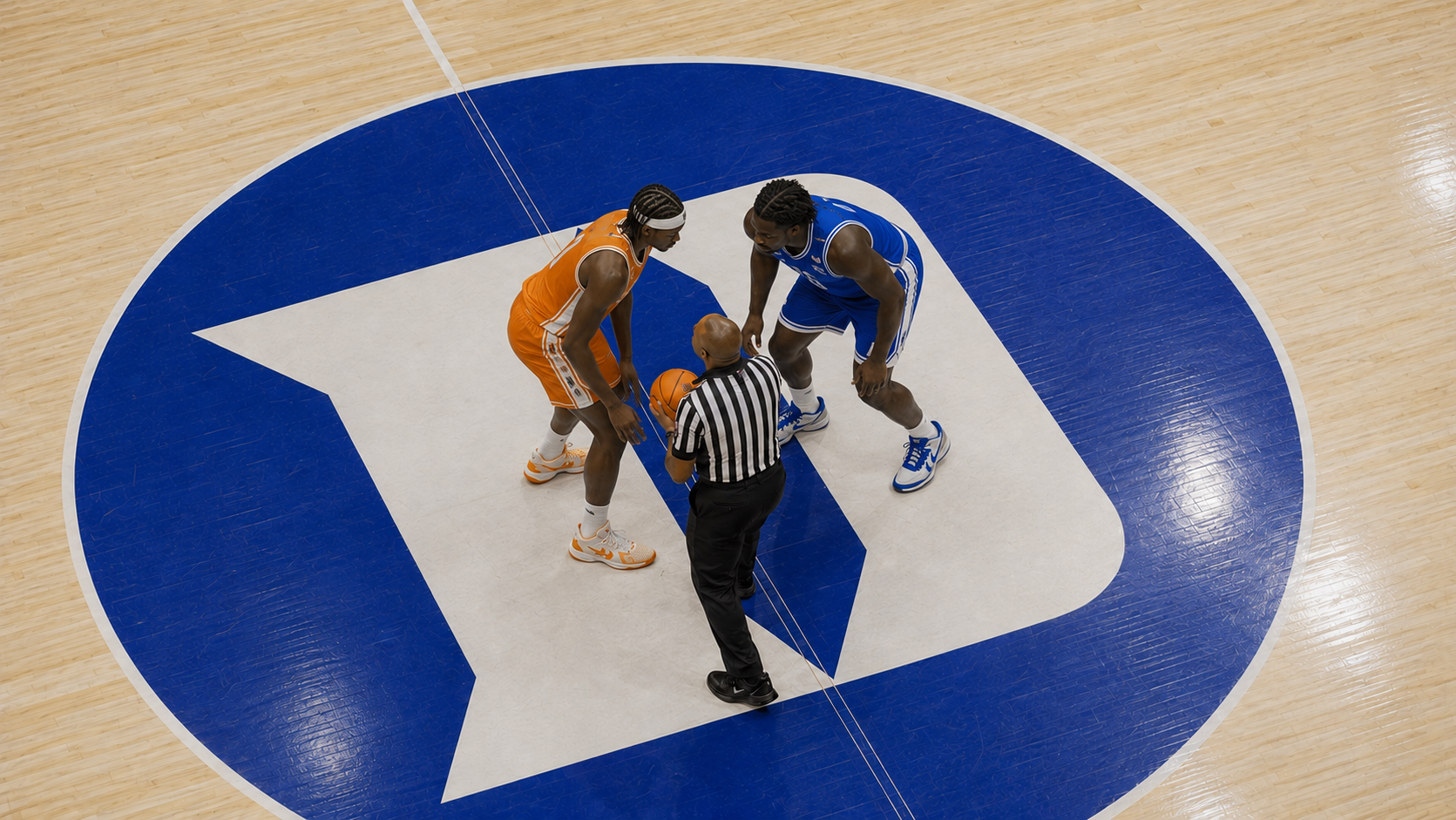
    Tennessee will not ease its retooled basketball team into the 2026-27 season. Instead, the Vols will walk into Cameron Indoor Stadium on Oct. 20 and measure themselves against Duke before their first official game is played.

    It is precisely the kind of preseason test Tennessee needs.

    The Blue Devils have assembled another roster carrying legitimate Final Four expectations, combining an accomplished returning nucleus with three transfers and the nation’s second-ranked recruiting class. Duke returns four of its top six scorers from a 35-win team, giving Jon Scheyer considerably more continuity than Rick Barnes will have as Tennessee works a collection of newcomers into meaningful roles.

    Tennessee could have chosen a comfortable exhibition opponent and used the night to distribute minutes, experiment with combinations and manufacture a lopsided result. Barnes has long preferred something more revealing.

    “We are confident this matchup will benefit both teams and really help prepare us for the upcoming season,” Barnes said when the first Tennessee-Duke exhibition was announced last summer.

    One year later, the same logic applies even more forcefully.

    The Vols will arrive in Durham with a roster reshaped around newcomers such as coveted transfer Juke Harris, Jalen Haralson, Terrence Hill Jr., Dai Dai Ames, Tyler Lundblade and Miles Rubin. Talented freshmen Ralph Scott and Marquis Clark are also entering a program that has reached three consecutive Elite Eights but must again establish its identity with a substantially different cast.

    Cameron Indoor is no place for a team still in search of an identity.

    That is precisely what makes the matchup so valuable. Tennessee will encounter elite talent, veteran players and one of the most unforgiving road environments in college basketball, all without an official loss being attached to whatever weaknesses Duke exposes.

    Barnes and his staff should learn more from 40 minutes in Durham than they could from several exhibitions against overmatched competition. The Vols will find out which guards can organize the offense under pressure, whether their new rotation can rebound against high-level size and which players remain dependable when communication becomes difficult.

    They may also discover that this group is ready earlier than expected. An impressive showing would not establish Tennessee as a finished product, and an exhibition victory would carry no weight in March. It could, however, provide the first evidence that Barnes has successfully connected another rebuilt roster—and give the Vols an opportunity to introduce themselves nationally before the season begins.

    The matchup also comes with some unfinished business.

    Duke defeated Tennessee 83-76 last October before a sold-out crowd at Food City Center. The Vols led 43-37 at halftime and had been ahead by nine late in the opening period, only to surrender a 23-9 Duke surge after the break.

    Cameron Boozer overwhelmed Tennessee with 24 points, 23 rebounds and six assists. Duke controlled the glass 48-39, collected 16 offensive rebounds and made all 20 of its second-half free throws while Tennessee went more than seven minutes without a field goal late in the game.

    “That was everything we could ask for, and more,” Scheyer said afterward, describing the demanding environment Tennessee provided for his team.

    Now the venues—and the opportunity—will be reversed.

    Many of the players responsible for last year’s result have moved on, particularly on Tennessee’s side. That keeps this from being revenge in the traditional sense, but programs remember these encounters even when the participants change.

    Duke came to Knoxville, absorbed Tennessee’s early pressure and left with a victory. The Vols will now have an opportunity to return the favor on the Blue Devils’ floor, where Tennessee has not played since an 86-80 victory on Dec. 3, 1975.

    There is also more connecting these programs than one October rematch. Tennessee and Duke are the only two teams in the country to have reached the Elite Eight in each of the past three seasons, placing this exhibition between two programs that have repeatedly played deep into March.

    Tennessee has embraced this level of preseason competition under Barnes. The Vols defeated No. 2 Gonzaga 99-80 in a 2022 exhibition and won 89-88 at No. 4 Michigan State the following year, experiences that supplied an immediate test of teams that ultimately became national contenders.

    Duke represents the next version of that challenge, only this Tennessee team may need the confrontation more than most. With new scorers, new playmakers and new defensive responsibilities throughout the rotation, the Vols cannot afford to spend November discovering who they are.

    They will receive some answers on Oct. 20.

    The result will disappear from the record once the regular season begins. What Tennessee reveals about itself at Cameron Indoor—and what it learns while trying to settle last October’s score—could last considerably longer.

    – Vol Hoops Staff Writer

  • The Lady Vols’ Road to March Won’t Be Easy

    The Lady Vols’ Road to March Won’t Be Easy

    The SEC didn’t reveal game dates when it announced Tennessee’s 2026-27 conference opponents. It didn’t need to. One look at the Lady Vols’ path through the nation’s toughest league was enough to understand the expectation surrounding Kim Caldwell’s program entering the season.

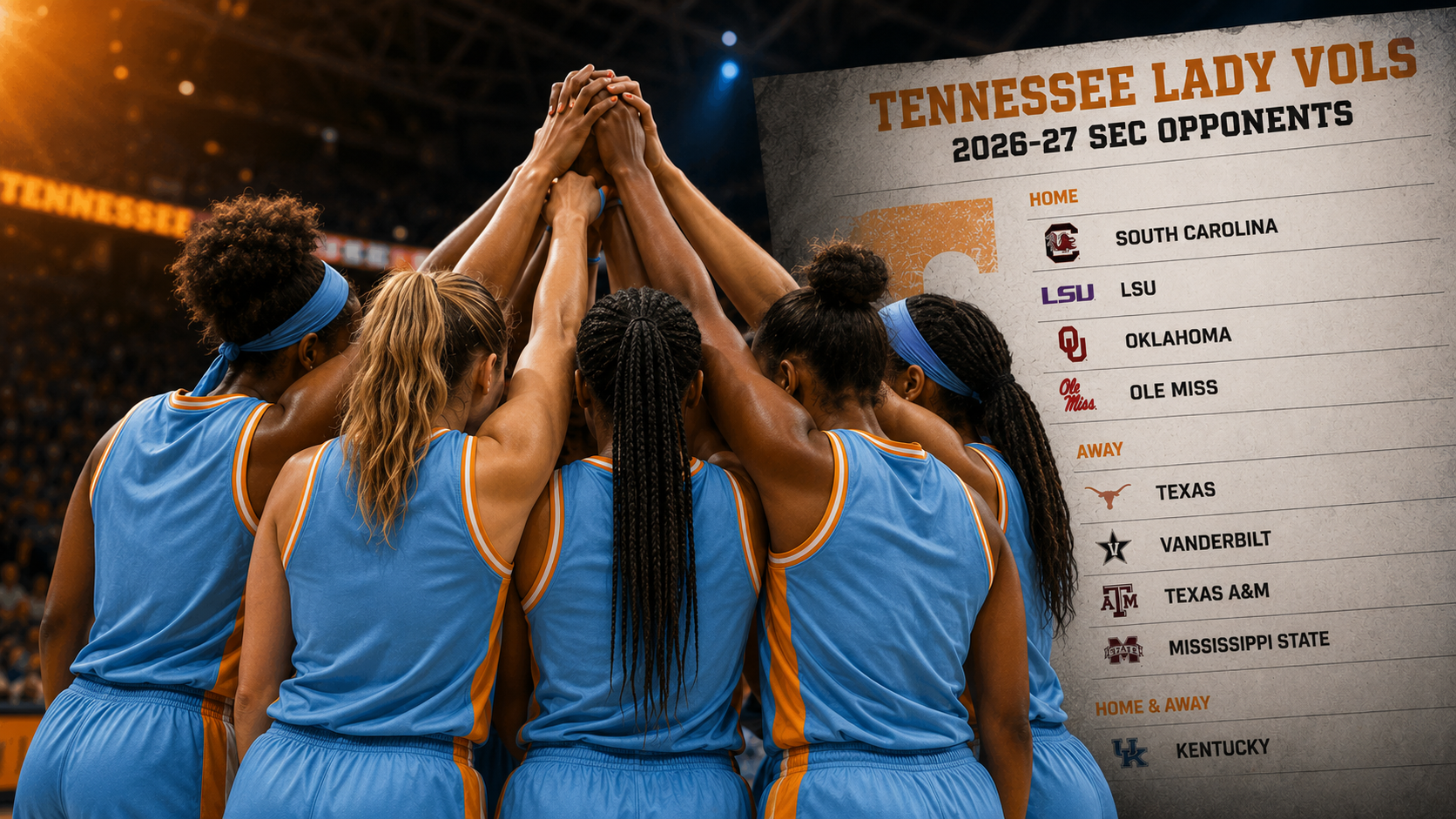
    Tennessee will host South Carolina, LSU, Oklahoma and Ole Miss while traveling to Texas, Vanderbilt, Texas A&M and Mississippi State during conference play. Kentucky is the Lady Vols’ lone home-and-home opponent, creating two rivalry games that could carry major weight in the SEC standings and NCAA Tournament résumé discussions.

    The opponents tell a story that goes well beyond the schedule itself. The SEC isn’t easing Tennessee into another season because there is no easing into life at the top of women’s college basketball. If the Lady Vols intend to reestablish themselves among the conference’s elite, they’ll have to prove it against many of the same programs already occupying that space.

    Caldwell has never shied away from that reality. “It’s the toughest league in the country,” she has said when discussing SEC competition, a sentiment that reflects both the nightly challenge awaiting her team and the standard Tennessee continues to embrace rather than avoid.

    That mindset matters because this year’s conversation feels different from a year ago. Last season centered on whether Caldwell’s relentless style could translate to the SEC after arriving from Marshall. This season, the question isn’t whether the system belongs—it’s whether Tennessee is ready to take the next step with it.

    The home schedule offers marquee opportunities from the opening tip. South Carolina remains the league’s benchmark, LSU continues to assemble one of the nation’s most talented rosters, and Oklahoma has wasted little time establishing itself as an SEC contender since joining the conference. Those aren’t simply attractive games for fans; they’re measuring sticks for a program determined to climb higher.

    The road schedule may prove even less forgiving. Trips to Texas, Vanderbilt, Texas A&M and Mississippi State leave little room for extended slumps, and seasoned SEC observers know championships are rarely built on home-court success alone. The teams that separate themselves in March are usually the ones capable of winning in difficult environments throughout January and February.

    That’s why this schedule release deserves more than a quick glance at opponents. It serves as an early reminder that Tennessee is no longer being viewed as a rebuilding program searching for its footing. The Lady Vols are being judged against the conference’s best because that’s exactly where expectations have returned.

    For Tennessee fans, that’s the encouraging part. The road ahead may be demanding, but meaningful basketball has always required meaningful expectations—and the SEC has made it clear the Lady Vols are expected to answer that challenge.

    – Vol Hoops Staff Writer

  • Success Breeds Respect. Tennessee Has Earned Both.

    Success Breeds Respect. Tennessee Has Earned Both.

    There was a time when Tennessee basketball had to earn the nation’s attention every season. A fast start might generate headlines, but analysts often waited for the inevitable stumble before fully buying in. Today, that conversation has completely changed. When national championship contenders for the 2026-27 season began appearing this week, Tennessee wasn’t included as a surprise—it was included as an expectation.  

    That may be the clearest measure yet of what Rick Barnes has built in Knoxville.

    One respected national preseason analysis identified only nine programs with a realistic chance to win the national championship next April, placing Tennessee alongside blue-bloods such as Duke, Florida, Arizona, UConn and Michigan State. The projection wasn’t driven by returning production alone, but by confidence in a program that has repeatedly weathered roster turnover without sacrificing its identity. That’s a remarkable place for Tennessee basketball to find itself after replacing so much of last season’s roster.  

    Roster turnover has become one of the defining realities of modern college basketball, forcing many programs to essentially start over every offseason. Tennessee has hardly been immune, yet Barnes has consistently convinced both players and national observers that standards matter more than continuity. As he said during summer workouts, “We like them a lot. They’ve responded to it. They’ve grown together as a group of guys and I feel like we’re putting together a good team.”  

    That confidence wasn’t built through one magical March run or a single breakthrough season. It has been earned over more than a decade of consistency, player development and relentless defensive basketball. Barnes enters his 12th season having led Tennessee to eight straight NCAA Tournament appearances, seven 25-win seasons, five Sweet 16s and three consecutive Elite Eights, a résumé that has fundamentally changed how the sport views the Volunteers.  

    Barnes has never hidden what he believes separates good teams from championship-caliber programs. “Production over retention is what we were looking for,” he said when discussing this offseason’s roster construction, a statement that perfectly captures Tennessee’s approach in the transfer portal. Rather than chasing familiarity, Barnes has consistently pursued experienced players who fit the culture his staff has spent years establishing.  

    Perhaps the strongest evidence of that culture is that expectations continue to rise instead of resetting. Even with a roster full of newcomers, the assumption around the sport is that Tennessee will defend at an elite level, improve steadily throughout the season and once again contend near the top of the SEC. Barnes himself offered a glimpse into why that confidence exists, saying, “I love this time of year… when you got a group of guys that wanna be good, I think they embrace it, too,” before adding that his players have “embraced it” and that “we’re very pleased with them.”  

    Every program wants respect. The best ones eventually reach the point where respect is no longer something they have to ask for because years of sustained excellence have already answered the question. Tennessee has reached that point under Rick Barnes, and that may be the greatest compliment of all: the Volunteers are no longer trying to convince the college basketball world they belong among the nation’s elite—they’ve spent enough years proving it.

    – Vol Hoops Staff Writer

  • Increasingly, Elite Recruits Aren’t Looking for an Easy Coach. They’re Looking for Rick Barnes.

    Increasingly, Elite Recruits Aren’t Looking for an Easy Coach. They’re Looking for Rick Barnes.

    There are certain phrases fans expect to hear during summer basketball interviews. Players talk about chemistry, sacrifice, leadership and chasing championships. But this offseason, Tennessee’s newcomers have repeatedly landed on a different theme, one that says as much about Rick Barnes’ program as any stat or recruiting ranking ever could: he coaches them hard.

    To an outsider, that might sound like a warning. At Tennessee, however, it has become one of the program’s biggest selling points.

    Juke Harris, Tennessee’s marquee transfer from Wake Forest, didn’t hesitate when asked about the adjustment to playing for Barnes. “He’s going to be the same regardless of what’s going on,” Harris said. “He’s going to coach hard… He’s not going to sugar coat nothing with you. So I really do appreciate that. I feel like that’s something I needed, so that’s a reason why I chose to come here.”

    That final sentence may be the most revealing quote of Tennessee’s entire offseason.

    Barnes didn’t have to convince Harris he was already a great player. An All-ACC performer averaging more than 21 points per game already knew that. What Barnes offered instead was something far more valuable: an honest assessment of the parts of Harris’ game that still needed work.

    Speaking earlier this summer, Harris explained that Barnes immediately pointed out details involving his defensive positioning, fighting through screens, closeouts and even the way he turned his body coming off screens—areas Harris admitted he hadn’t fully recognized himself. Rather than taking offense, he embraced the criticism because it showed Tennessee had a genuine plan to elevate every aspect of his game.

    If Harris were the only newcomer saying this, it might simply reflect his personality. Instead, the same message has surfaced repeatedly from nearly every corner of Tennessee’s locker room.

    “We all came here for the same reason,” transfer Jalen Haralson said. “We want to play professionally, we want to be coached hard and we want to win.” He later added, “I love Coach Barnes. He’s real direct, but he wants to push you… It’s some days it’s like this guy’s relentless, but that’s what I signed up for.”

    Haralson didn’t stop there. Asked whether Barnes had already gotten on him during practice, he smiled at the premise instead of resisting it, saying, “He wants you to get better and he’s not gonna let you slack… It’s all from a place of love… I signed up for that. I knew that coming in.”

    Those comments reveal an important distinction that is often misunderstood. Hard coaching is not the same as harsh coaching. Barnes’ players aren’t describing a coach who embarrasses them or tears them down—they’re describing someone who refuses to accept shortcuts, demands accountability and tells them the truth, even when it isn’t comfortable.

    That same honesty extends beyond the practice floor. Haralson said Tennessee’s staff impressed him during the recruiting process because they “didn’t sugarcoat things,” choosing instead to explain exactly where his game needed to improve and how they planned to help him reach another level.

    In today’s college basketball landscape, that philosophy stands out. Players have more freedom than ever before through the transfer portal, NIL opportunities and the ability to seek situations that promise immediate comfort. Yet Tennessee continues attracting elite talent that already knows Rick Barnes’ demanding reputation before ever stepping on campus.

    They aren’t surprised by his standards. They’re choosing them.

    Perhaps that’s the clearest sign of what Tennessee has built under Barnes. The Volunteers aren’t selling easy minutes or empty praise. They’re selling development, accountability and a belief that greatness rarely comes from being told only what you want to hear.

    When multiple high-profile transfers independently describe hard coaching as one of the primary reasons they chose Tennessee, it says something bigger than any preseason ranking ever could. The best players don’t come to Rick Barnes despite his demanding coaching—they’re increasingly coming because of it.

    – Vol Hoops Staff Writer

  • Vol Mens’ Early Schedule Was Built with March in Mind

    Vol Mens’ Early Schedule Was Built with March in Mind

    For weeks, Tennessee fans have waited for the final piece of the 2026-27 puzzle. Now that Rick Barnes has unveiled the Volunteers’ complete non-conference schedule, it’s clear this isn’t just another collection of November and December games—it may be the ideal runway for a team with legitimate Final Four aspirations.  

    Barnes has never believed in padding a résumé with empty victories, but he has also never subscribed to the idea that every night should feel like an NCAA Tournament game. This year’s slate strikes that balance almost perfectly, giving Tennessee multiple opportunities to earn signature wins while allowing a roster loaded with new faces to develop before the SEC season begins. As Barnes said upon releasing the schedule, Tennessee will face “six to eight games versus Power Five foes” before conference play, a challenge designed to prepare the Vols for another deep March run.  

    The early headliner arrives Nov. 17 when Michigan State visits Food City Center. The Spartans remain one of college basketball’s premier programs, making the matchup an immediate measuring stick, while the Players Era Championship in Las Vegas guarantees Tennessee multiple opportunities to strengthen its NCAA Tournament résumé before December even begins. Barnes also noted the Vols will “play all their games at Michelob ULTRA Arena,” ensuring another week on one of college basketball’s biggest November stages.  

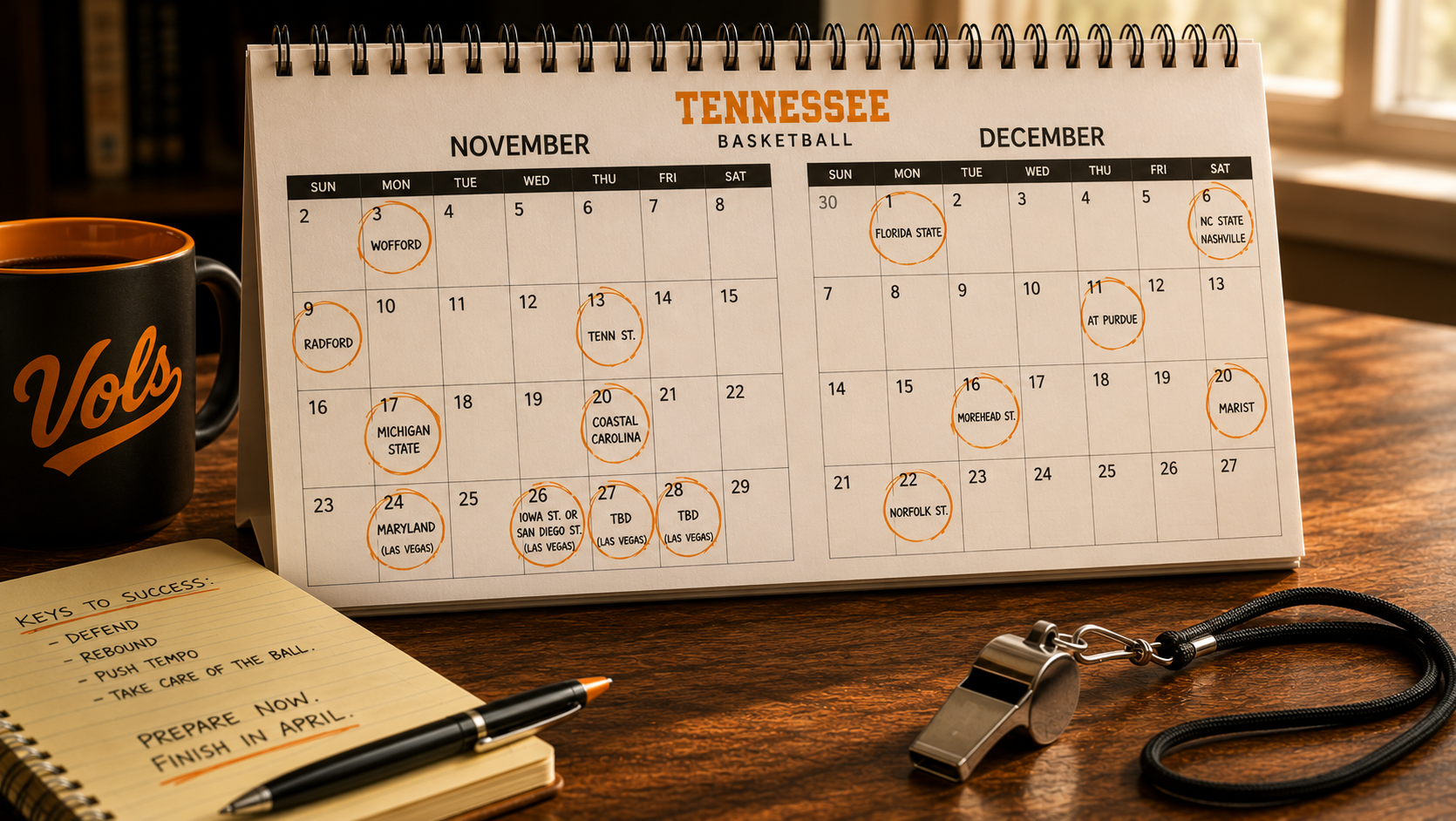
    Tennessee’s 2026-27 Non-Conference Schedule

    • Nov. 3 — Wofford (Food City Center • Knoxville, Tenn.)
    • Nov. 9 — Radford (Food City Center • Knoxville, Tenn.)
    • Nov. 13 — Tennessee State (Food City Center • Knoxville, Tenn.)
    • Nov. 17 — Michigan State (Food City Center • Knoxville, Tenn.)
    • Nov. 20 — Coastal Carolina (Food City Center • Knoxville, Tenn.)
    • Nov. 24 — Maryland (Players Era Championship • Michelob ULTRA Arena • Las Vegas)
    • Nov. 26 — Iowa State or San Diego State (Players Era Championship • Las Vegas)
    • Nov. 27 — TBD (Players Era Championship • Las Vegas)
    • Nov. 28 — TBD (Players Era Championship Championship/Placement Game • Las Vegas, if applicable)
    • Dec. 1 — Florida State (SEC/ACC Challenge • Food City Center • Knoxville, Tenn.)
    • Dec. 6 — NC State (Bridgestone Arena • Nashville, Tenn.)
    • Dec. 11 — at Purdue (Mackey Arena • West Lafayette, Ind.)
    • Dec. 16 — Morehead State (Food City Center • Knoxville, Tenn.)
    • Dec. 20 — Marist (Food City Center • Knoxville, Tenn.)
    • Dec. 29 — Norfolk State (Food City Center • Knoxville, Tenn.)  

    The schedule hardly eases up after Thanksgiving. Florida State comes to Knoxville in the SEC/ACC Challenge, NC State awaits in Nashville, and Tennessee heads to Purdue for another showdown against one of the nation’s perennial contenders. Those are exactly the kinds of games that reveal a team’s ceiling long before the SEC race begins.  

    Just as important, Barnes resisted the temptation to turn November into an endurance test. Wofford, Radford, Tennessee State, Coastal Carolina, Morehead State, Marist and Norfolk State provide valuable opportunities to build chemistry, establish rotations and help a talented roster grow together before January arrives. That balance may prove every bit as valuable as the marquee matchups themselves.  

    Championship contenders don’t need to prove everything before Christmas. They need enough high-level challenges to expose weaknesses, enough winnable games to sharpen strengths, and enough résumé opportunities to impress the selection committee without arriving at SEC play already running on empty.

    That’s exactly what Tennessee accomplished.

    Vol fans have every reason to be excited. This schedule isn’t about collecting headlines—it was built to prepare a team that believes its biggest goals still lie ahead.

    – Vol Hoops Staff Writer

  • No Timeline, No Panic: Why Tyler Lundblade Has Earned Tennessee’s Patience

    No Timeline, No Panic: Why Tyler Lundblade Has Earned Tennessee’s Patience

    Tennessee hasn’t released a timetable for Tyler Lundblade’s return from a lingering back injury. But Rick Barnes’ confidence—and Lundblade’s remarkable history of turning setbacks into springboards—gives Vol fans legitimate reason for measured optimism.

    Silence often gives way to speculation.

    That’s where Tennessee fans find themselves with transfer sharpshooter Tyler Lundblade.

    The Vols haven’t announced a timetable for his return from a lingering back injury, and each open practice he misses naturally fuels another round of questions. Is it serious? Will he be ready for November? Should fans be worried?

    The honest answer is that there isn’t enough public information to know.

    There is, however, enough evidence to believe patience—not panic—is still the wiser response.

    Let’s begin with what we actually know. Lundblade has missed multiple open summer practices while recovering from the injury, but he hasn’t been completely absent. During one June session, reporters observed him working through controlled shooting drills away from full team activities, where his shooting stroke looked every bit as advertised. Tennessee has not publicly disclosed a diagnosis, released a recovery timetable or indicated that surgery is involved. Those omissions don’t guarantee a quick return, but neither do they suggest a season-threatening setback.

    The most encouraging public update has come from Rick Barnes himself. While discussing Lundblade this summer, Barnes praised the veteran transfer’s professionalism and basketball IQ before offering the clearest assessment Tennessee fans have heard to date: “He’ll be fine.” Barnes added that once Lundblade returns to the floor, he expects him to pick up Tennessee’s system quickly because of his experience and feel for the game. It wasn’t a medical update, but it was a meaningful vote of confidence from the person closest to the situation.

    Lundblade’s history offers another reason for optimism. Before becoming one of college basketball’s most coveted shooters, his career was repeatedly interrupted by adversity. After beginning as a walk-on and later earning a scholarship at TCU, he suffered an adductor injury that required sports-hernia surgery. Unable to jump or train normally during rehabilitation, Lundblade reportedly spent months making 700 to 800 free throws a day, refining the mechanics that eventually became the foundation of his game. He transferred to Belmont, developed into the Missouri Valley Conference Player of the Year and emerged as one of the nation’s premier perimeter shooters.

    That history doesn’t predict how quickly a back injury will heal. An adductor injury and a back injury are entirely different medical issues. What it does illustrate is the way Lundblade has consistently responded when his career has been disrupted. Rather than allowing setbacks to define him, he has repeatedly turned them into opportunities for growth.

    With several months remaining before Tennessee tips off its season, there is still ample time for Lundblade’s situation to evolve. Until the program offers a more specific update, uncertainty will remain part of the conversation. But based on the information currently available—including Barnes’ confidence and Lundblade’s documented track record of overcoming adversity—the evidence points toward patience rather than panic.